AI Wellness Comparisons
Traditional Wellness Apps vs AI-Powered Wellness Platforms: What's the Difference?
Discover the key differences between traditional wellness apps and AI-powered wellness platforms. Learn how AI is transforming emotional wellbeing through personalisation and adaptive guidance.
Digital wellness has evolved significantly over the past decade. Millions of people now use wellness apps to meditate, sleep better, reduce stress, build healthier habits, and improve emotional wellbeing.
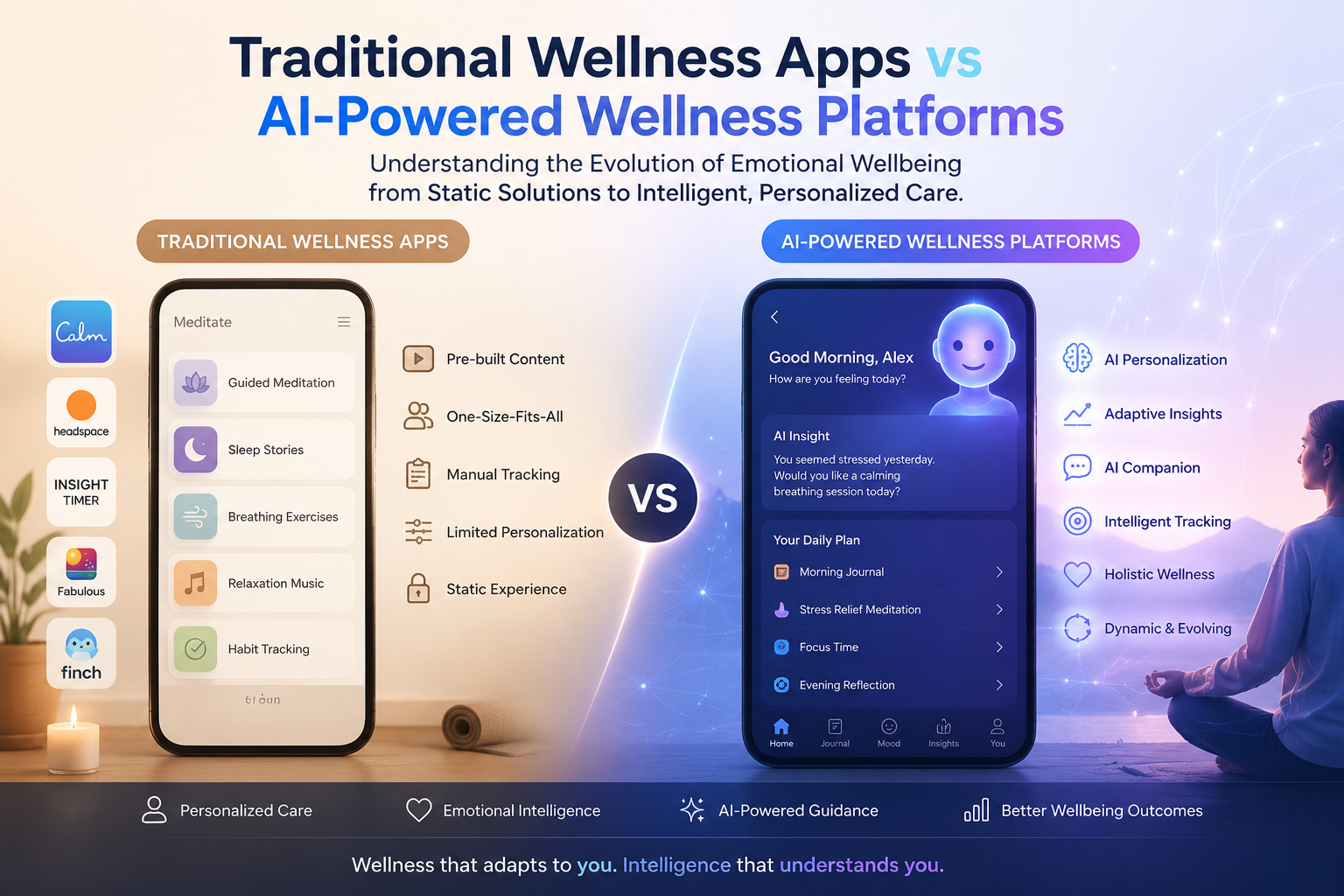
Popular platforms such as Calm, Headspace, Insight Timer, Fabulous, and Finch have introduced millions of users to digital wellness. These applications have made meditation, breathing exercises, sleep stories, and habit tracking more accessible than ever.
However, advances in artificial intelligence have introduced a new category of digital wellness tools: the AI wellness platform. Instead of offering the same experience to every user, AI-powered wellness platforms aim to personalise support based on an individual's emotions, habits, goals, and changing needs.
This article explores the key differences between traditional wellness apps and AI-powered wellness platforms — helping you understand how the digital wellness landscape is evolving, and what each approach offers.
What Are Traditional Wellness Apps?
Traditional wellness apps typically provide structured content that users can explore independently. Rather than adapting to you over time, they present a library of experiences you can choose from whenever you need them.
Common features include:
- Guided meditation sessions
- Sleep stories and relaxation audio
- Breathing exercises
- Habit tracking
- Mindfulness courses
- Daily reminders
- Relaxation music
These platforms provide valuable wellness resources and have helped many people build healthier daily routines. Their simplicity is often a strength — clear, calm, and easy to open when you need a moment of stillness.
What Is an AI-Powered Wellness Platform?
An AI wellness platform combines traditional wellness techniques with artificial intelligence to provide a more personalised experience. Rather than relying solely on pre-recorded content, AI systems can adapt recommendations based on your interactions, emotional patterns, and preferences over time.
Features may include:
- AI-guided journaling with personalised prompts
- Adaptive mood tracking with pattern recognition
- Conversational AI companions for ongoing emotional support
- Intelligent daily planning based on your wellbeing data
- Personalised sleep coaching
- Wellness insights that evolve with you over time
- Personalised meditation sessions tailored to your current state
Instead of simply selecting a meditation session from a library, you may receive recommendations informed by your recent mood patterns, sleep quality, or what you wrote in your journal that morning.
Traditional Wellness vs AI Wellness: A Comparison
| Feature | Traditional Wellness Apps | AI Wellness Platforms |
|---|---|---|
| Guided Meditation | ✔ | ✔ — adaptive to your state |
| Sleep Support | ✔ | ✔ — personalised coaching |
| Mood Tracking | Basic | Adaptive with pattern insights |
| Journaling | Manual / blank page | AI-guided with tailored prompts |
| Personalisation | Limited | Dynamic — evolves with you |
| Wellness Insights | Limited | Personalised over time |
| Daily Recommendations | Fixed content library | Adaptive based on your data |
| AI Companion | Usually unavailable | Available on some platforms |
| Continuous Learning | Limited | Designed to evolve with input |
Capabilities vary across individual products. Not every platform includes every feature listed above.
The Evolution of Personalisation
Traditional wellness apps generally present the same content library to every user. Two people experiencing very different challenges — one dealing with work burnout, another navigating relationship stress — may receive similar meditation recommendations simply because they selected the same category.
An AI wellness platform seeks to provide a more individualised experience by considering factors such as:
- Daily mood check-ins
- Wellness goals and priorities
- Sleep patterns and quality
- Journaling themes and emotional tone
- Previous interactions and preferences
- Time of day and energy levels
The objective is to make recommendations that better reflect each person's unique wellness journey, rather than offering a one-size-fits-all experience. Platforms like WellGrowthAI track these patterns through tools like BioSync Intelligence™, which models your daily energy, focus, and stress rhythms over time.
AI Emotional Wellness: Beyond Meditation
Meditation remains an important wellness practice, but emotional wellbeing often involves many interconnected factors. Modern AI emotional wellness platforms may support users through a broader range of features, including:
- Emotional reflection and guided journaling
- Habit formation and accountability
- Stress management and breathing techniques
- Sleep improvement coaching
- Personalised daily wellness routines
- Motivational and emotional coaching
- Pattern-based wellness insights over weeks and months
Rather than focusing on one activity in isolation, these platforms aim to support multiple aspects of wellbeing in one place — creating a more joined-up picture of how your habits, emotions, and routines interact.
For a deeper look at how AI approaches emotional support, see our research on how AI understands emotional patterns.
Where Traditional Wellness Apps Excel
Traditional wellness apps continue to offer genuine strengths. They are particularly well suited for people looking for:
- High-quality guided meditation with professional narrators
- Calming sleep stories
- Curated relaxation music
- Structured mindfulness courses
- Simple daily routines that are easy to maintain
Many users find these experiences calming, easy to use, and effective for establishing consistent habits. If your primary goal is a daily meditation practice, a traditional app may be exactly what you need.
Where AI Wellness Platforms May Offer Additional Support
AI-powered wellness platforms introduce capabilities that may provide a more tailored experience, particularly for people whose wellness needs change frequently or who want to understand their patterns more deeply.
Potential advantages include:
- Adaptive recommendations that respond to your current state
- Personalised journaling prompts that evolve with your emotional themes
- Mood-aware suggestions informed by recent check-ins
- Dynamic daily wellness planning via tools like the Smart Daily Blueprint
- Intelligent reminders timed to your natural rhythms
- Ongoing personalisation that deepens over time
These technologies continue to evolve as artificial intelligence becomes more capable of understanding context and supporting individualised wellness experiences. To learn more about the science behind personalisation, visit our Research section.
Which Approach Is Right for You?
The answer depends on your personal goals and how you prefer to engage with wellness tools.
Traditional wellness apps may be a good choice if you primarily want:
- A focused guided meditation practice
- Relaxation content and sleep stories
- Simple mindfulness routines
- A calm, low-commitment daily habit
An AI wellness platform may be worth exploring if you're looking for:
- Personalised guidance that adapts to your emotional state
- AI-assisted journaling and reflection
- Mood-aware recommendations across multiple wellness areas
- Adaptive daily planning and wellness insights
- A more conversational and interactive wellness experience
Both approaches can play valuable roles in supporting healthy habits. Many people find they benefit from using both — a traditional app for calm daily meditation, and an AI platform for deeper emotional reflection and personalised guidance.
How WellGrowthAI Approaches AI Emotional Wellness
WellGrowthAI is designed as an AI-powered adaptive wellness platform focused on emotional wellbeing. Its approach combines multiple wellness experiences into a single ecosystem, including:
- AI-guided journaling with personalised prompts
- Adaptive mood tracking and emotional pattern recognition
- Personalised wellness insights and weekly intelligence reports
- Adaptive meditation sessions
- Personalised sleep coaching
- An AI companion (Orja™) for ongoing emotional support
- BioSync Intelligence™ for daily energy and focus predictions
Rather than replacing established wellness practices such as meditation, WellGrowthAI aims to complement them through personalised guidance informed by your interactions and preferences. Explore our plans and pricing to see which tier fits your wellness goals.
For a broader overview of every major AI wellness platform side by side, see our cornerstone guide: Best AI Wellness Platforms in 2026: A Comprehensive Comparison.
Frequently Asked Questions
Are AI wellness platforms replacing traditional meditation apps?
Not necessarily. Meditation remains a valuable wellness practice, and many AI wellness platforms include meditation as a core feature. AI platforms tend to add personalisation and broader emotional support rather than replacing the meditation experience itself.
Are traditional wellness apps still useful in 2025 and beyond?
Yes. Many people benefit greatly from guided meditation, sleep stories, and mindfulness exercises offered by traditional wellness apps. These tools continue to evolve and serve millions of users effectively.
What is an AI wellness platform?
An AI wellness platform uses artificial intelligence to personalise wellness experiences through features such as adaptive mood tracking, AI-guided journaling, dynamic recommendations, and conversational emotional support.
Is WellGrowthAI a therapy or medical platform?
No. WellGrowthAI is designed to support emotional wellbeing and healthy wellness habits. It is not a replacement for professional medical or mental health care. Always consult a qualified healthcare provider for medical or mental health concerns.
What is the main difference between Calm and an AI wellness platform?
Calm focuses primarily on high-quality guided meditation, sleep stories, and relaxation content delivered through a curated library. An AI wellness platform like WellGrowthAI adds adaptive personalisation, emotional pattern tracking, AI-guided journaling, and ongoing companion support that evolves with your individual wellness journey.