How Personalized Text to Speech Meditation Helps
By WellGrowthAI — July 19, 2026 — 7
Personalized text to speech meditation adapts guidance, pace, and reflection to your real day, helping you build a calmer, more consistent daily practice.
At 10:47 p.m., a generic meditation about "finding your inner light" can feel strangely disconnected from the day you actually had. Maybe your mind is replaying a difficult meeting, your body is still holding tension, or tomorrow's unfinished list is getting louder. Personalized text to speech meditation is designed for that gap: it turns guidance that reflects your current emotional context into a voice-led practice you can follow when reading another screen feels like too much work.
The difference is not simply hearing text instead of reading it. A useful personalized session can adjust its focus, language, pacing, and prompts around the patterns you are building over time. It can meet a stressed professional before a presentation, support a student whose sleep schedule has shifted, or offer a quieter reset to a caregiver who has had little uninterrupted time all day.
What personalized text to speech meditation actually means
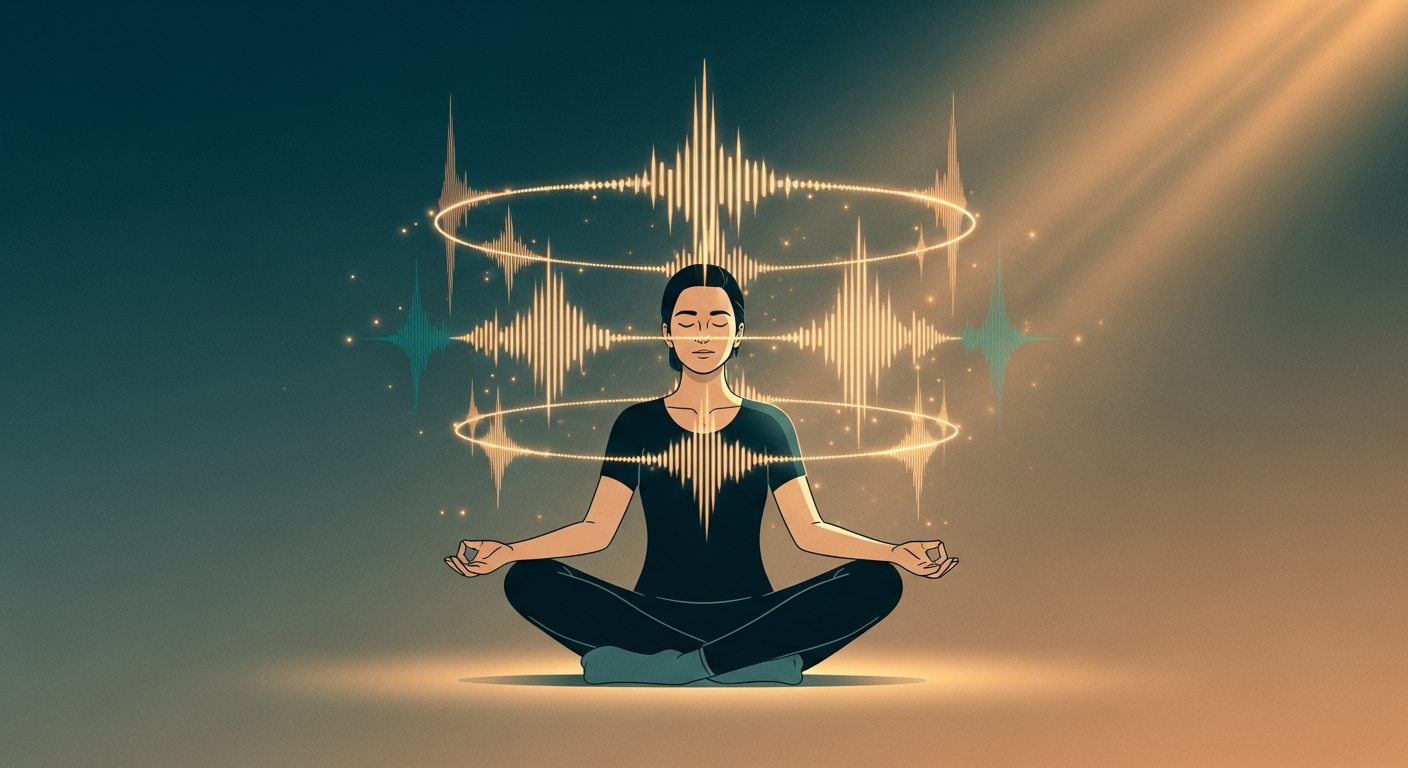
Text-to-speech meditation uses a digital voice to guide breathing, body awareness, reflection, or relaxation. Personalization adds meaningful context. Instead of choosing a broadly labeled session such as "stress relief," you receive guidance shaped by signals you have chosen to track — including mood check-ins, journal reflections, sleep quality, energy levels, habits, and recent goals.
This does not mean an app can read your mind. The quality of personalization depends on the information you provide and the patterns it can responsibly identify. If your check-ins consistently show lower energy after short sleep, for example, the guidance may favor a brief grounding practice over an ambitious focus exercise. If your journal entries show recurring overwhelm before Monday mornings, it may offer a session that helps you sort priorities and settle anticipatory stress.
The result should feel specific without becoming intrusive. Good guidance uses emotional context as an invitation, not a diagnosis. It can say, in effect, "You have been carrying a lot this week. Let us take three minutes to arrive," rather than pretending it knows exactly why you feel the way you do. The World Health Organization recognizes that personalized, accessible wellness tools play a meaningful role in supporting everyday mental wellbeing.
Why a familiar voice and relevant words can help
Meditation is often less about finding the perfect technique than removing the small points of friction that make consistency hard. A personalized audio practice removes one common barrier: deciding what you need when you are already mentally tired.
When the session begins with language that matches your experience, it can also reduce the pressure to force yourself into a particular mood. You do not have to be calm before you start. A well-written prompt may acknowledge restlessness, frustration, or fatigue, then offer one manageable action: notice your breath, loosen your jaw, name one thought without following it, or let the next minute be simpler than the last.
Voice matters too. Some people respond best to a steady, low-stimulation delivery before sleep. Others prefer a more energizing tone during an afternoon reset. Pace, pause length, voice style, session duration, and language all influence whether a guided meditation session feels supportive in real life. Research indexed on PubMed consistently links regular meditation practice — even brief sessions — with reduced stress reactivity, improved sleep onset, and greater emotional regulation over time.
From one-time sessions to emotional memory
A large meditation library gives you options. An adaptive wellness system can offer continuity.
Emotional memory is the difference between a tool that treats every session as a blank slate and one that recognizes your recent context. Over time, longitudinal emotional pattern analysis can connect the dots between your sleep, mood, energy, journal themes, and routines. The goal is not to label you. It is to help you notice relationships that are easy to miss while living at full speed.
For example, you may discover that your evening anxiety rises on days when work stretches past dinner, or that your clearest mornings follow a short wind-down ritual rather than an hour-long meditation. Weekly pattern detection can make those signals visible. This is where BioSync Intelligence adds real value — connecting bio-rhythm data with your personalized meditation guidance so sessions reflect more than a single check-in.
WellGrowthAI brings mood tracking, sleep coaching, intelligent journaling, personalized meditation, and bio-rhythm insights into one connected experience through Orja, so guidance can reflect the full picture of your week rather than an isolated moment.
What a useful session might sound like
Personalization does not need to be elaborate to be meaningful. A two-minute practice after a difficult day might begin by recognizing that you have reported low energy and elevated stress. It could invite you to sit back, feel the support beneath you, and exhale longer than you inhale for several breaths.
A session before bed may take a different approach. Rather than asking you to solve tomorrow, it might guide you to note the thought that keeps returning, place it on a mental list for the morning, and bring attention back to physical sensations. If your sleep tracking has shown irregular bedtime patterns, the session could gently reinforce a consistent wind-down cue.
On a more focused day, the practice may be less about relaxation and more about intention. A short voice prompt can help you identify the one task that matters most, recognize competing demands without absorbing them all, and begin with a clearer boundary around your attention. Pairing this with an AI journaling prompt for stress before or after the session can deepen the reflection. The American Psychological Association notes that even short mindfulness practices can measurably reduce stress and improve emotional regulation when practiced consistently.
How to use personalized text to speech meditation well
Start with an honest check-in rather than the answer you think you should give. If you feel irritable, scattered, tired, or numb, that is useful context. Accurate input through your daily mood check-in creates more relevant guidance, while performative tracking creates noise.
Then choose the moment you want the practice to support. Morning sessions can help with intention and energy awareness. Midday sessions are useful for interrupting stress before it accumulates. Evening sessions can create a transition between responsibility and rest. There is no universally best time, only a time that fits your rhythm often enough to become familiar.
Keep your first sessions short. A few minutes of consistent listening gives you feedback: Did the voice help you settle? Did the pace feel rushed? Did the prompt speak to what was actually happening? Those observations help you refine your preferences and make the experience more personal.
It also helps to pair meditation with an existing cue — after you close your laptop, while the kettle heats, before you turn off the bedroom light, or after a daily mood check-in. The National Institute of Mental Health emphasizes routine and consistency as key factors in building sustainable mental wellness habits.
Personalization has limits, and that is healthy
More data is not always better data. A wellness platform should make it clear what it collects, how it uses information, and what controls you have. Personal reflection is sensitive. Privacy, consent, and the ability to edit or remove entries are part of a trustworthy experience, not secondary details.
Personalized meditation is not a substitute for professional mental health care. It can support everyday stress management, reflection, sleep routines, and emotional awareness. If you are experiencing persistent distress, feel unsafe, or need clinical support, a qualified healthcare or mental health professional is the right source of care.
Finally, avoid treating a recommendation as a command. Your data may suggest that a calming session could help, but you remain the expert on your lived experience. If a prompt feels wrong for the moment, skip it, shorten it, or choose a different practice. Personalization should strengthen your agency, not narrow it.
A calmer practice starts with being understood
The value of personalized guidance is not that every meditation becomes perfectly tailored. It is that your wellness practice can become more responsive than a static playlist. When your voice-led sessions reflect your energy, your routines, and the patterns you are beginning to see, taking a pause can feel less like another task and more like genuine support.
The next time your mind is too busy to choose a meditation, begin with one honest check-in. A few words about how you feel may be enough to create a practice that meets you where you are and helps you take the next steady step. Explore WellGrowthAI plans to see how personalized, voice-guided meditation fits into a connected wellness practice.
Frequently Asked Questions
What is personalized text to speech meditation?
Personalized text to speech meditation uses a digital voice to deliver meditation guidance that adapts to your emotional context — including your mood check-ins, sleep quality, journal themes, and energy levels — rather than offering the same generic script to every user.
How is personalized meditation different from a standard guided meditation app?
Standard guided meditation apps offer pre-recorded sessions browsed by topic. Personalized meditation adapts the focus, language, duration, and pacing based on signals you track over time through tools like mood tracking and sleep coaching.
How long should a personalized meditation session be?
Session length should match your available time and energy. A three-minute practice repeated daily tends to build a stronger habit than a 30-minute session attempted occasionally. Start short and adjust based on what you can realistically sustain during busy weeks.
Can I use personalized text to speech meditation for sleep?
Yes. Evening sessions work particularly well when calibrated to your recent sleep patterns and stress levels. A practice that acknowledges accumulated tension and guides you toward physical relaxation can support a more consistent wind-down routine.
Is personalized meditation a replacement for therapy?
No. Personalized meditation supports everyday stress management, emotional awareness, and healthy routines. It is not a substitute for professional mental health care. If you are experiencing persistent distress, please contact a qualified healthcare professional.